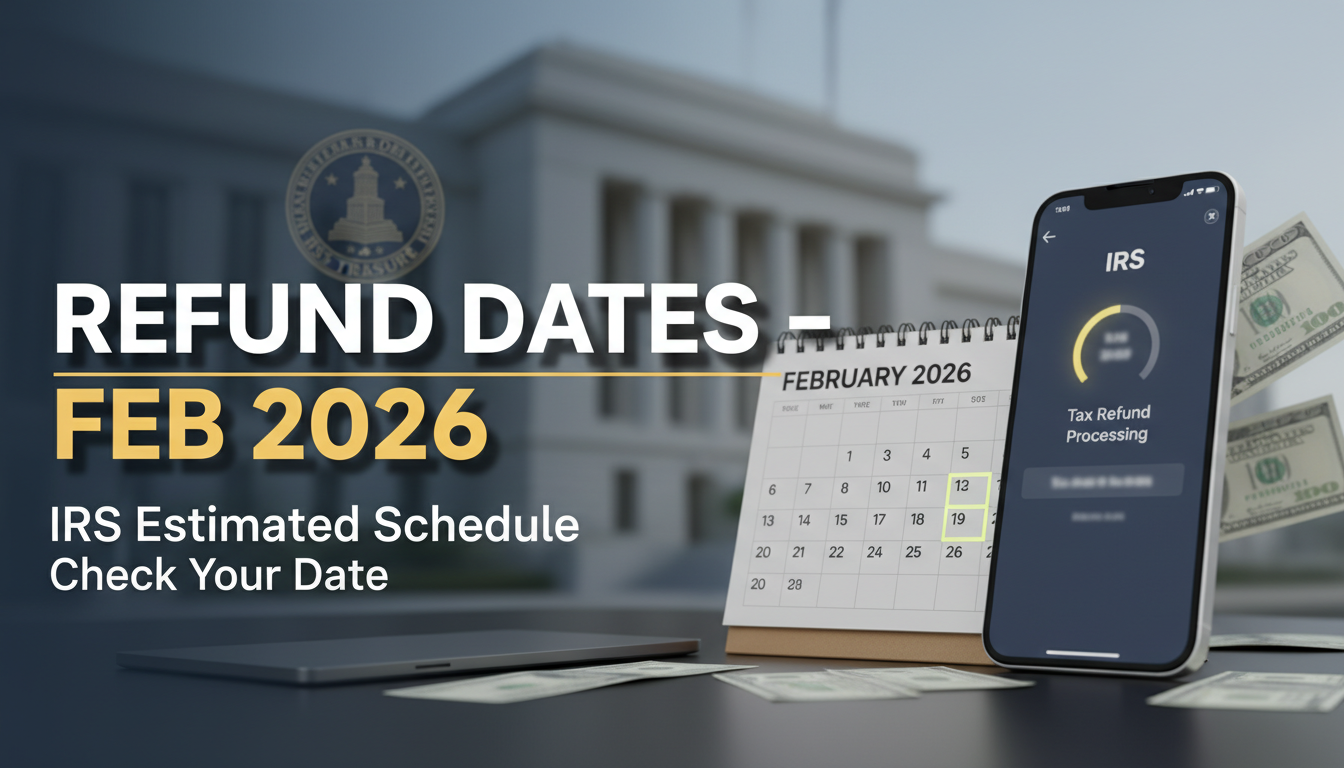
Estimated Refund Date Check: The 2026 U.S. income tax season has reached an important stage, with millions of Americans actively checking the status of their tax refunds. For many households, refunds are not optional spending money but a critical source of financial support. Rising prices for food, housing, utilities, and healthcare have made timely refunds more important than ever.
February plays a major role in the tax calendar because it is often when the first large wave of refunds is issued. Taxpayers who file early closely watch this month, hoping their refunds arrive quickly to help manage ongoing expenses and financial obligations.
Why February Matters for IRS Refunds
February is traditionally one of the busiest months for tax refunds because many taxpayers file their returns as soon as the IRS opens the filing season. Early filers often include salaried workers, retirees, and families with straightforward tax situations. These returns are usually processed more quickly by the IRS.
In 2026, inflation pressures encouraged even more taxpayers to file early. Many households aimed to receive refunds as soon as possible to help offset higher living costs. As a result, February has become even more significant for those relying on refunds for financial stability.
How the IRS Processes Tax Returns
After a tax return is filed electronically and accepted, it enters the IRS processing system. The system reviews reported income, tax credits, and withholding amounts to ensure they match employer and financial institution records. If everything aligns correctly, the return moves forward for refund approval.
Taxpayers who choose direct deposit typically receive their refunds faster than those requesting paper checks. Paper returns and mailed checks require manual handling, which can extend processing times. Even minor mistakes or missing details can delay approval and payment.

Estimated IRS Refund Timing for February 2026
Taxpayers who filed electronically in late January 2026 and selected direct deposit may start seeing refunds arrive in early February. Many of these payments are expected during the first or second full week of the month, depending on processing speed.
Those who file in early February often receive refunds by mid to late February. However, returns that include refundable credits or involve more complex tax situations may take longer. These cases sometimes require additional review, pushing refunds into late February or early March.
Refunds Involving Credits and Additional Reviews
Certain tax credits, such as refundable credits, can affect refund timing. The IRS may take extra time to review these returns to confirm eligibility and prevent fraud. While this review process may delay refunds, it helps ensure accuracy and protects taxpayers.

Although waiting can be frustrating, these safeguards are part of the IRS effort to maintain system integrity. Taxpayers should allow additional time if their return includes credits or unusual income changes compared to previous years.
Common Reasons IRS Refunds Are Delayed
Refund delays can happen even during an otherwise smooth tax season. Incorrect bank account numbers, mismatched personal information, or simple calculation errors can slow processing. Identity verification requirements may also cause delays in certain cases.
Amended returns or corrections from prior tax years often require manual review, which extends processing time. Tax professionals strongly advise against submitting duplicate returns, as this can create confusion and lead to even longer delays.
Also Read:
 IRS February 2026 Refund Timeline: Estimated Income Tax Refund Dates and Processing Updates
Insights from Tax Professionals in 2026
Tax professionals report that in 2026, electronically filed returns with accurate information are moving through the system relatively quickly. Clean returns with no discrepancies are often processed and refunded within expected timeframes.
However, returns that fall outside normal patterns are receiving closer examination. While this can delay refunds, experts agree that careful filing and accuracy remain the best ways to avoid unnecessary issues and long wait times.
How Refund Timing Affects Household Finances
For many families, a February tax refund is used to pay winter utility bills, reduce debt, or rebuild savings. Receiving refunds on time provides financial relief and reduces the need to rely on credit cards or loans.

Delays, on the other hand, can increase stress, especially for lower-income households and retirees on fixed incomes. Even short delays can disrupt budgets and force difficult financial decisions during an already expensive time of year.
Economic Impact of February Tax Refunds
Tax refunds do not only affect individual households; they also influence the broader economy. Each February, billions of dollars are returned to taxpayers, boosting spending on essentials, services, and local businesses.
When refunds are delayed, economic activity can slow down. This highlights how timely IRS processing benefits not just individuals but also communities and the overall economy.

How to Check Your IRS Refund Status
The IRS provides official tools that allow taxpayers to track their refund status after a return is accepted. These tools show whether a refund is still processing, approved, or scheduled for payment.
While updates may not appear every day, these tools remain the most reliable source of information. Tax advisors recommend avoiding rumors or unofficial schedules, as refund timing varies based on individual circumstances.
What Happens After February
Refund processing continues into March for those who file later or whose returns require additional review. No major changes to IRS procedures have been announced for the remainder of the 2026 tax season.

Taxpayers should continue monitoring official IRS communications and respond promptly to any notices. Doing so helps prevent further delays and ensures refunds are issued as smoothly as possible.
February remains one of the most important months for IRS tax refunds, particularly for early filers in 2026. Understanding how refunds are processed, choosing direct deposit, and filing accurate returns can reduce uncertainty and delays.
While not every refund arrives at the same time, staying informed and patient helps taxpayers plan more effectively. For many households, a timely refund can make a meaningful difference in managing rising living costs.

Disclaimer
This article is for informational purposes only and is based on general IRS practices and historical trends. Actual refund dates may vary depending on individual tax situations, filing accuracy, and IRS processing requirements. Readers are encouraged to consult official IRS resources or a qualified tax professional for personalized guidance.